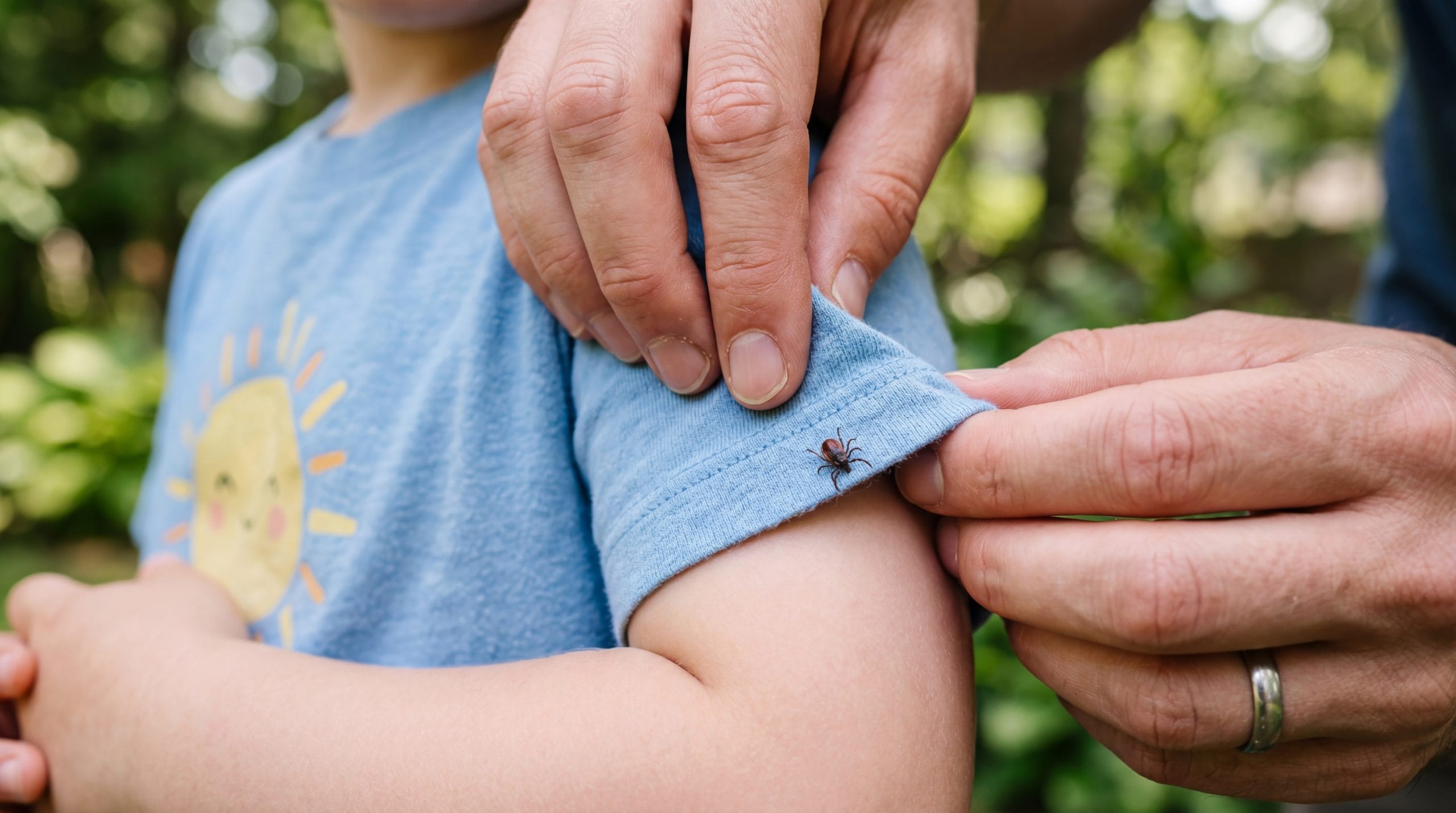
Children love spending time outdoors. Whether they’re hiking, camping, playing sports, or simply exploring the backyard, those adventures come with countless benefits—but they can also increase the risk of tick bites in certain parts of the country. While not every tick carries Lyme disease, it’s important for parents to understand the signs and symptoms so they know when to seek medical care.
One of the challenges with Lyme disease is that symptoms can vary from child to child. Some children develop the classic bull’s-eye rash, while others may experience flu-like symptoms or never notice a rash at all. Early recognition and evaluation are key to helping children receive appropriate care.
Here’s what every parent should know about Lyme disease in children.
What Is Lyme Disease?
Lyme disease is caused by the bacterium Borrelia burgdorferi, which is spread through the bite of an infected blacklegged tick (also called a deer tick). Ticks are commonly found in wooded areas, tall grasses, leaf piles, and brush, although they can also be present in neighborhood parks and backyards.
Not every tick bite leads to Lyme disease, and not every tick carries the bacteria. However, understanding the symptoms can help parents respond quickly if concerns arise.
Early Signs of Lyme Disease in Children
Symptoms often appear anywhere from several days to a few weeks after a tick bite, although timing can vary.
Some of the most common early symptoms include:
A Rash
Many people associate Lyme disease with the well-known bull’s-eye rash, called erythema migrans. While this rash is common, not every child develops the classic target appearance.
The rash may:
- Gradually expand over several days
- Feel warm but usually isn’t painful or itchy
- Appear as a solid red patch rather than a bull’s-eye
- Develop anywhere on the body, not just where the tick bite occurred
Because the rash can vary significantly, parents shouldn’t rely on its appearance alone.
Fever
A low-grade fever is another common early symptom and may occur alongside other flu-like symptoms.
Fatigue
Children with Lyme disease often seem unusually tired. They may sleep more than usual, lose interest in activities they normally enjoy, or seem to have less energy throughout the day.
Headaches
Persistent headaches can occur during the early stages of Lyme disease and may accompany fever or fatigue.
Muscle and Joint Aches
Some children complain that their legs, knees, neck, or other muscles hurt even without an obvious injury.
Symptoms That May Develop Later
If Lyme disease isn’t recognized early, additional symptoms may develop over time.
These may include:
- Joint swelling, particularly in the knees
- Neck stiffness
- Facial muscle weakness (sometimes called facial palsy)
- Numbness or tingling
- Ongoing fatigue
- Difficulty concentrating
- Memory problems
- Changes in mood or behavior
- Sleep disturbances
Not every child experiences these symptoms, and they may appear weeks or even months after the initial infection.
Children Don’t Always Remember a Tick Bite
One of the biggest misconceptions about Lyme disease is that someone always remembers being bitten by a tick.
In reality, ticks are extremely small, especially in their immature stages. Many bites are painless, and children often never realize they’ve been bitten.
Parents may also miss ticks because they commonly attach in hard-to-see areas like:
- Behind the ears
- Along the hairline
- Under the arms
- Around the waist
- Behind the knees
- Between the legs
- Around the ankles
This is why performing tick checks after outdoor activities is so important.
How to Reduce the Risk of Tick Bites
While it’s impossible to eliminate every risk, a few simple precautions can help lower the chance of tick bites.
Parents can:
- Perform full-body tick checks after outdoor play.
- Shower soon after spending time outdoors.
- Dress children in long sleeves and pants when hiking through wooded or grassy areas.
- Tuck pants into socks when appropriate.
- Use insect repellents according to label directions.
- Keep grass trimmed and remove leaf litter around the home.
- Check pets that spend time outdoors, as they can bring ticks inside.
These small habits can make a meaningful difference during tick season.
What Should You Do If You Find a Tick?
If you discover a tick attached to your child:
- Remove it promptly using fine-tipped tweezers.
- Grasp the tick as close to the skin as possible.
- Pull upward with steady, even pressure.
- Clean the area with soap and water after removal.
- Monitor your child for symptoms over the following days and weeks.
If your child develops a rash, fever, fatigue, or other concerning symptoms after a tick bite—or after spending time in areas where ticks are common—contact your healthcare provider for guidance.
When Should Parents Seek Medical Care?
It’s important to seek medical evaluation if your child experiences:
- A rash following a tick bite
- Fever without another obvious cause after outdoor exposure
- Persistent fatigue
- Joint pain or swelling
- Facial weakness
- Neurological symptoms
- Any unusual symptoms following known or suspected tick exposure
Prompt evaluation allows your healthcare provider to determine whether additional testing or treatment is appropriate.
A Functional Medicine Perspective
For some families, questions remain after the initial diagnosis or treatment of Lyme disease, particularly if symptoms continue or become more complex. Functional medicine takes a comprehensive, patient-centered approach by looking beyond individual symptoms to better understand factors that may be affecting a child’s overall health and wellness.
This may include evaluating nutrition, immune system health, gut health, inflammation, sleep quality, environmental factors, and other aspects of whole-body health. Every child is unique, and care should always be personalized to their individual needs.
Helping Your Child Stay Healthy
Most outdoor adventures end with nothing more than great memories, and parents shouldn’t let concerns about ticks keep children from enjoying nature. Instead, awareness and prevention are your best tools.
By performing regular tick checks, recognizing early symptoms, and seeking medical evaluation when concerns arise, parents can help protect their children while still encouraging active, healthy lifestyles.
At Functional Healing with Dr. Tara, we understand that every child’s health journey is unique. If you have questions about Lyme disease, ongoing symptoms, or a functional medicine approach to supporting your child’s overall wellness, we’re here to help guide your family toward answers and personalized care.